Colombian Democracy Seen Winning as 60% Reject Leftist Threat
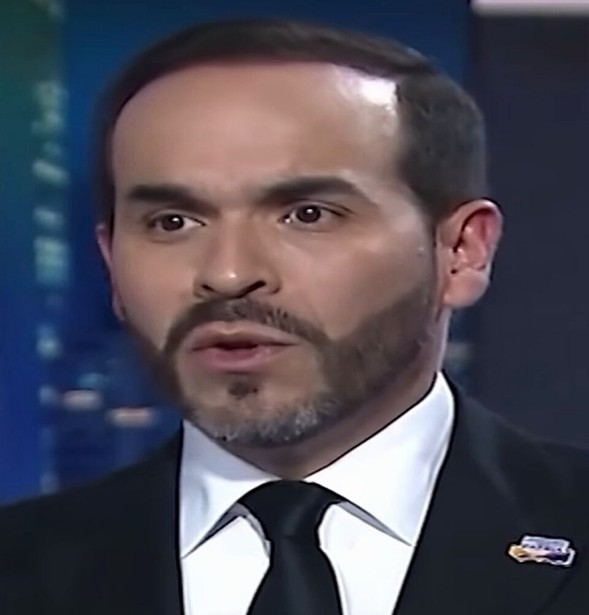
More than 20 million Colombian voters went to the polls yesterday (31 May) to decide which two leading Presidential candidates (out of an initial field of a dozen) will face-off in the final runoff election on June 21.
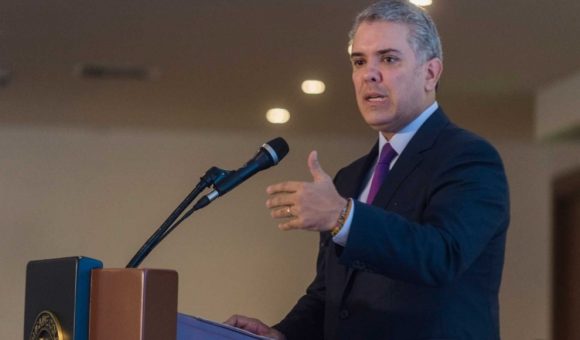
The clear winner yesterday was right-of-center and democracy-defending candidate Abelardo de la Espriella, with 43.7% of the total vote (10.3 million votes), versus left-winger Iván Cepeda, with 40.9% (9.6 million votes).
Cepeda, like his sponsor — current President Gustavo Petro — is pushing for a Constitutional convention that aims to undercut Colombia’s tripartite separation of powers and shift more toward a centralized, top-down authoritarian state — a type of government that (ironically) U.S. President Donald Trump also favors.
Immediately following the official results from last night, third-place finisher Paloma Valencia — the center-right candidate who won 1.6 million votes (6.9%) yesterday — endorsed de la Espriella, all but guaranteeing that de la Espriella will become Colombia’s next President later this year.
Cepeda, by contrast, is seen as having little chance of capturing sufficient voters from the other failed candidates to overcome de la Espriella, as none of those other candidates favor replacing Colombia’s democracy with an authoritarian state, and most other candidates reject the often incoherent, economy-kneecapping and fiscally reckless actions of current Colombia President Gustavo Petro.
On the other hand, de la Espriella, a 47-year-old professional lawyer, also has a controversial past, having provided legal counsel to some despicable characters including “DMG” pyramid scammer David Murcia Guzmán, defense for some criminal members of Colombian narco-paramilitary groups, and for having proposed a defense of Alex Saab — accused of money laundering and allegedly being a front man for former Venezuelan President Nicolás Maduro, who was deposed in a President-Trump-ordered military kidnapping in January 2026.
From Abelardo de la Espriella’s official campaign website, here are some of his proposals for governing Colombia — if and when he takes office later this year:
“Destroy the 330,000 hectares of coca and utilize all the tools that the law and technology allow, including aerial fumigation, manual eradication, the pursuit of drug traffickers’ assets, expedited asset forfeiture, crop substitution, and extradition.”
“Restore the prison system” with new jails for violent gangsters, like the model system created by El Salvador’s current president.
Fix Colombia’s teetering public health system that has been knee-capped by President Petro — putting millions of poorer and working-class Colombians into endless waits for services, surgeries and medicines, and bankrupting or nationalizing private or mixed “EPS” health promotion organizations, with resulting bureaucratic incompetence and financial disasters.
De la Espriella would instead make remaining EPS networks “more efficient administratively with maximum limits on administrative costs” and create arbitration courts for redirecting “mismanaged resources,” according to the campaign website.
Colombian hospitals and clinics now face a staggering COP$24 trillion (US$6.7 billion) in unreimbursed costs as a result of Petro’s destructive national health policies, a situation that de la Espriella says he aims to fix.
“Colombia is not a poor country, but one impoverished by corruption, violence, misgovernment, centralism, and systemic mediocrity,” according to the campaign website.
To change course, the new goverrnment would enact a “fiscal adjustment program that reduces the size of the state by up to a quarter (taking advantage of the new General System of Participations law and simultaneously strengthening territorial decentralization),” according to the campaign website.
This would be aided by “strengthening the autonomous fiscal rule committee to give it more teeth to control excessive spending by the executive or legislative branches through legal or constitutional means — similar to what Peru has, which allows for control over fiscal excesses and brings order to the system,” according to de la Espriella’s campaign website.
The proposal also would “reduce the tax burden, lower energy costs, and create a ‘Great Deregulation Revolution’ or the elimination of procedures, obstacles, and burdens for the business sector.
“This means a detailed review of inefficiencies in [heath system regulator] Invima, [agricultural sector regulator] ICA, superintendencies, chambers of commerce, notaries and registries, environmental permits, community consultations, and technical regulations of the Ministry of Commerce, the Ministry of Information Technologies and Communications, the Ministry of Transportation, and the DIAN (National Tax and Customs Directorate),” “according to the web site.